
Historic Sites in Kilifi County


Prince Henry the Navigator: Inspiring Seafarers
Although not as audacious and conspicuous as the distinguished Monument of Discoveries in Lisbon, the grand sculpture depicting Henry the Navigator holding a model of a carrack, with 33 figures from the discovery era on either side of the ramps, the miniature Prince Henry the Navigator Monument across from Malindi Museum, depicted by a simple carrack sail, likewise gives a nod to Portugal’s great seafaring and discoveries history and her relations along the Swahili coast.
Before 1500, neither Africa nor the Americas had been drawn into well-organized relationships with the rest of the world. When America was discovered, in 1492, the only parts of Africa visited by Europeans were those along the Mediterranean. Herodotus, the Greek writer, had published a classic story of Phoenician ships that had sailed about Africa but this was considered a fiction, and no one reckoned that Africa was a great continent or that India could be reached by going around it.
In the latter part of the 15th century goods from India and other parts of Asia were greatly desired by Europeans. They were in such demand that they were brought to the eastern shore of the Mediterranean by large caravans, thence send by boat to European ports. Such transportation was big-budget and finding a cheaper way by a sea passage became a weighty navigational goal, of excellence in the making.
Leaving Castile in August of 1492, Christopher Columbus, the intrepid explorer, looking for a new route to Asia, sailed west. He started in that direction and discovered America. His discovery of America turned Castile’s King Ferdinand II attention away from Asia and Africa, in instead to explore the Americas. Just the same, European nations, which at the time were more economically stable than Spain kept the dream alive. Portugal was one such threat, and about the same time she set her sights to find a way to India about Africa by sailing southward.
One man who was much interested in the quest was Prince Henry of Portugal, noted for his patronage of voyages of discovery among the Madeira Islands and along the West Africa. The epithet Navigator, applied to him by the English, though rarely by Portuguese writers, is a misnomer, as he himself never embarked on any discovery voyages but rather sponsored them. Born of nobility as the third son of King John I and Philippa of Lancaster, Henry, during his career life, recorded so many expeditions that he came to be known as Prince Henry the Navigator.
Thanks to his insufferable reputation, Henry was accorded by the king the sole right to send ships to visit and trade with the Guinea coast of Africa. He explored the northwestern coast of Africa, and, by the time of his death, in 1460, had sent ships as far south as the Gulf of Guinea. His interest in geography was swayed by the travels of Prince Pedro, his older brother. In 1425 Pedro set out on a tour of Europe on which he visited England, Germany, Hungary, and the territories of Moldavia and Romania, before returning home through Italy, Aragon and Castile.
Next to take on the mantle for Portugal’s exploration, to discover the new world, and more of Africa, was Diego Ciam. In 1484, he reached the mouth of the Congo. Three years later, Bartholomew Diaz, tasked by the King John II to discover a route around Africa, having been driven before a tempest, made land and found that he had reached the southern tip of the continent, and named it the Cape of Storms which was afterwards changed to the Cape of Good Hope, as we know it today.
One of Portugal’s sea captains sailed along the east coast to Sofala near Zanzibar. Even so, they did not know how far south Africa went, and were not sure there was a passage to India about Africa, but they surmised to find out. The next voyage was made by Vasco da Gama, in 1497, rounding the Cape of Good Hope enroute India. In 1498, he cast anchor before Mozambique, then a dependency of Kilwa. The inhabitants of Kilwa at first mistook the Portuguese for Muhammedans from the north of Africa, and accorded them two pilots to guide them to Calicut.
When they found that they were Christians, they became hostile, so da Gama set sail northerly heading, taking the two pilots who were on board. In April of 1498, Vasco da Gama reached finally reached the East African Coast. He put in first at Mombasa; but no sooner had the settled in than the entourage faced hostility.
Time and resources of the essence, da Gama acted fast, and soon departed to Malindi, where he was well received. Here, he got new pilots in place of the old ones and with them reached Calicut. His voyage created great excitement among navigators all over the western world and his route became a cheap ocean route to Asia. On this, the Portuguese made many voyages and built trade with India.
They set up trading posts: at the Cape at Sofala, a port at the Indian Ocean notable then for ivory and gold exports; at Mozambique; and in other places on the east and west coasts of the continent. Indeed, for a long time, they claimed that most of Africa was theirs. They warred with the Arabs trading along the Indian Ocean and added their conquest to Zanzibar, Mombasa and almost to the Gulf of Suez. Indian Ocean was sometimes spoken to as the great Portuguese Lake.
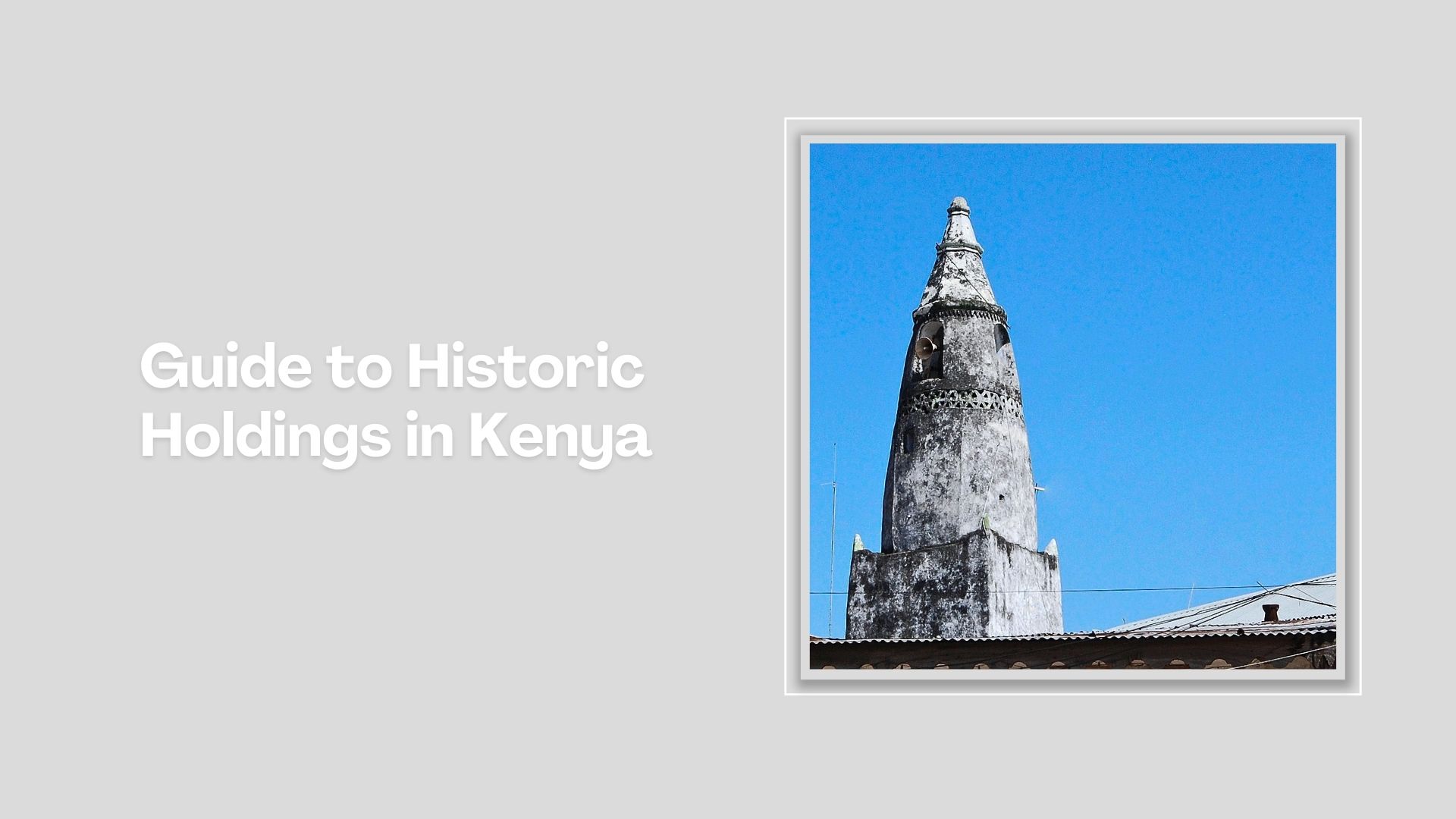
Kenya is home to numerous historic sites that showcase the country’s rich cultural heritage, ancient civilizations, colonial history, and struggle for independence. These historic sites offer valuable insights into Kenya’s past and its diverse cultural heritage, making them essential destinations for visitors interested in her history.
Index of Historic Sites Around Kenya


Baringo County - Timboroa Railway Station, Bungoma County - Chetambe Fort, Kilifi County - Prince Henry the Navigator Monument, Vasco da Gama Pillar, Malindi Pillar Tomb, Portuguese Chapel, Malindi Butwani Pier, Kwale County - Shimoni Ruins, Lamu County - Shela Mosque, Lamu Fort, German Post Office, Siyu Fort, Machakos County - Macmillan Castle Sabuk, Fort Machakos, Makueni County - Gurdwara Makindu Sahib, Patterson Ruins Tsavo, Meru County - Kaaga War Memorial, Twin Baobab Trees, Giant Meru Oak, Mombasa County - Fort Jesus, Old Port, Sanaa Gallery, Leven House, Old Law Courts, Kengeleni Bell, Old Railway Station, Mbaraki Pillar, Fort St. Joseph, Kraph Monument, Fort Makupa, Arab Rifle's Monument, Mombasa's Tusks, Ras Serani Light, Mandera County - Fort El Wak, Nandi County - Kaptumo I Kipture Forts, Samiitui Aldai Historic Stone, Nyeri County - Old Ruling Court, Taita Taveta County - Kitchwa Tembo Hill, Salaita Hill, The Sniper Tree, Maktau Railway Station, Mwashoti Hill, Mwakitau Hill, Tana River County - Tana Delta Old Fort, Tharaka Nithi County - The Mutunguruni Tree, Wajir County - Wajir Fort, Ancient Orahey Wells, Orahey Bunkers, The Old Town Wajir

Historic Ruins along the Coast of Kenya - Kwale, Mombasa, Kilifi, Tana River & Lamu


Touring Kilifi County offers a delightful blend of coastal beauty, lovely beaches, cultural richness, natural wonders, and fascinating ancient ruins. Whether you’re seeking pristine beaches, historical sites, or vibrant cultural experiences – or a combination, Kilifi promises a memorable and enriching travel experience.
Your Are Here: Henry the Navigator Monument
Where to Next
Explore Places Near Prince Henry the Navigator Monument
A Guide to Kilifi County


A Summa Digest of Kilifi

About Kilifi Way Back When

95 Destinations in Kilifi County, arranged as one would visit these - south, north, east then north - with aid of narratives, images, strip maps and distance chart:

Shimo la Tewa Prison, Mtwapa Creek, Mtwapa Ruins, The Moorings, La Marina Restaurant, Jumba la Mtwana, Kikambala Beach, Vipingo Mosque Ruins, Kinuni Ruins, Kuruwitu Conservancy, Neem Tree House, Vipingo Ridge, Chasimba Cave, Kilifi Sisal Plantations, Vuma Cliffs, Old Town Takaungu, Takaungu Creek, Kitoka Ruins, Takaungu House, Beneath the Baobab Festival, Kilifi Creek, Kilifi Bridge, Kilifi Boatyard, Distant Relatives Lodge, Mnarani Ruins, Mnarani Snake Park, 3 Degrees South, Kamili House, Mazingira Park, Bofa Beach, Saltys Kitesurfing Bar & Restaurant, Bush Baby Kilifi, Casa Dalton, Panga ya Saidi Cave, River Rare Geo Park, Arabuko-Sokoke Forest, Mwangea Hills Forest, Watamu Marine National Park, Uyombo Ruins, Rock & Sea Resort, Mida Creek, Sudi Island, Kirepwe Ruins, Watamu Beach, Ocean Sports Watamu, Medina Palms, Hemimways Watamu, A Rocha Eco Lodge & Conservation Centre, Watamu Treehouse, Garoda Beach, Tribe Watersports, Kite House, Local Ocean Conservation, Bio-Ken Snake Farm, Kiburugeni Ruins, Mgangani Ruins, Mida Creek Nature Camp, Gede Ruins, Kipepeo Butterfly Farm, Malindi Museum, Henry the Navigator Monument, Malindi Pier, Malindi Pillar Tomb, Malindi Waterfront Park, Portuguese Chapel, Vasco da Gama Pillar, Malindi Beach, Ndoro Sculpture Garden, White Elephant Sea & Art Lodge, Malindi Crocodile & Snake Farm, Malindi Marine National Park, Malaika Beach Sunbeds & Restaurant, Sawa Sawa Dhow Excursions, Lo Sfizio Coffee Shop, Lennox Art Gallery, Falconry of Kenya, Hanging Gardens, Malindi Golf & Country Club, River Sabaki Delta, Marafa Depression, Dakacha Woodland, Mekatilili wa Menza Site, Mambrui Dunes, Mambrui, Mambrui Tombs, Kibirakani Ruins, Che Shale Hotel Kitesurf Center, Ngomeni Shipwreck, Luigi Broglio Space Centre, The Nyika Plateau, Galana Conservancy, Ngala Mausoleum, Rabai Museum, Kaya Kambe Shrine, Thomas Wakefield Memorial Church

Know More About Kilifi County: Its Geography, Land-Use, Highlights, Population, Roads - including strip maps, Airports, Climate & National Monuments


What’s The Lay Of The Land In C.05?
Kilifi can be split into three zones – the narrow coastal plain, varying in width from 3 kms to 20 km; few coastal hills lying below 30 ms asl, and the Nyika Plateau rising from 100ms to 340 ms asl.

What’s The Air Like In Kilifi?
For the greater part of the year, the climate along the coastal plain is pleasurable, though humid. Temperature ranges between 21C and 30C along the coast, and between 30C and 34C further inland.

 Abiri Kenya