
The Land-O-Mountains


A Summa Digest of Samburu County
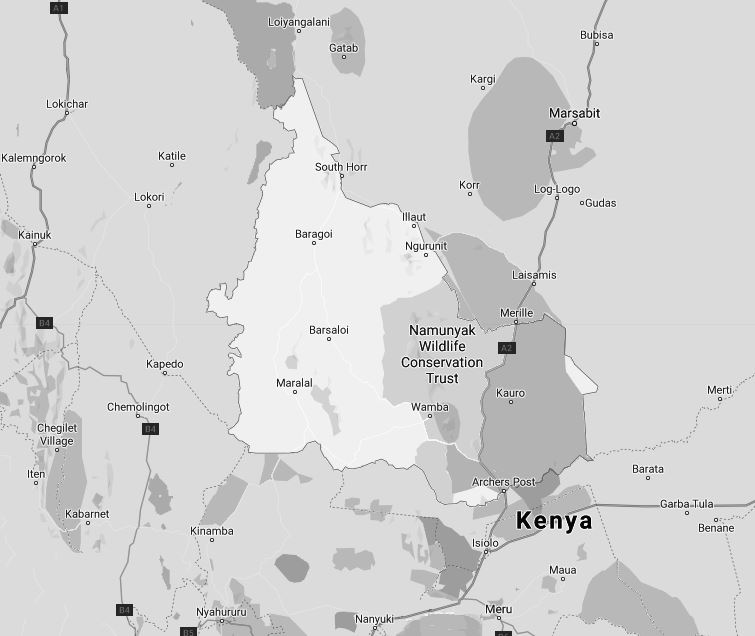
Outwith on its wend to Ethiopia, running just east of north from Nairobi to Moyale, the A2 Road reaches Archer’s Post, the capital and gateway town into Samburu County; distance from Nairobi 308 km. Once just a dusty outpost in the back of beyond, Archer’s Post, reached soon after crossing the Ewaso Nyiro River bridge, the unofficial boundary with Isiolo County, has much to commend it now. Beyond Archer’s Post, the A2 Road runs through a traffic-free stretch of road made for the travel books – uninhabited, primitive, and utterly stunning – past epic mountains and endless plains to Merille, the gateway into Marsabit County; distance 104 km.
Named after the Samburu community, a close kin of the Maasai of South-Western Kenya, Samburu County, famed for its breathtaking mountains, takes much of its character from the contiguous Isiolo County in the south. Further south, as you cross the peripheral area between Nanyuki and Isiolo towns, the line of hills and mountains, seen in the distance north, as the road suddenly descends into the semi-arid lower area, as Mount Kenya and the Central Highlands fade away, are within toughing distance in Samburu County. The most famous of these, Mount Ololokwe more proper Ol Donyo Sabache lies just 30 km north of Archer’s Post.
Generally speaking, Samburu County, spectacularly christened big came county, is surrounded, on almost all sides, by striking mountain ranges. The composition of its gamut is a immensely grand wilderness, instantiated by unique landforms and wildlife. Among its other prominent stretches of range mountains, pleasantly dominating the north and eastern areas, are Nyiru Range, Ndoto Mountains and Mathews Range. The Kirisia Hills form a similar range in the western area to boot. These ranges are surrounded by gullied and craggy footslopes, often of dramatic dimensions, painting a picturesque landscape in almost every direction you take.
Conversely, the western border of Samburu County, beyond the Samburu Hills, is marked by a howling valley. Without doubt one of the most stunning viewpoints in Kenya, Losiolo Escarpment, reachable on long afternoon’s drive from Maralal town, is a widly-scenic scene. Here, the land dramatically drops into a 20-30 km wide strip of step-sided hills, plateaus and volcano foot-ridges to compose one of the most spectacular landscapes anywhere Kenya. For hundreds of feet below, stretching as a far as the eye can see, the floor of the Rift Valley transforms itself with every changing season. Inaccessibility is a major downside of its undersell, yet, it is satisfactorily incredible and well worth all the difficulty of getting there.
To put it briefly, Samburu is scenically-splendid, wild and savage, with plenty of wildlife concentrated along River Ewaso Nyiro. And the excursion to Samburu is no less interesting. The newly built A2 Road, connecting Nairobi and Moyale, and traversing Samburu, is a joy to drive on. If all the above were not sufficient, the appeal of this county is capped by the authenticity of its Samburu Community. Adorned with painting, scarring, colorful regalia and ornaments, the Samburu people are as distinct as they are unique. Their believes, customs, cultures and other flairs splendent when observed at close quarters; most akin to the Maasai.
Going through many particular across Samburu County, the intrepid explorer will quickly notice that almost all the mountains and hills are not not settled; by design rather than by default. While many of the hills and mountains dotting the south of Kenya are associated as battlefields, the mountains bestrewing both Samburuland and Maaisailand are seldom settled, revered for all manner of divinity. Perhaps in equal measure in both these tribes is that their respective mountainous terrain is an ideal refuge over the drier times of the year, except that their enemies are the other pastoralist communities competing for the same health-giving hill assets.
In stead, the mosaic of pastoralists communities, predominantly of the Samburu, are mainly out in the plains below, less tolerant there, especially over the drier months of the year, where they refrain from coexisting over pasture and are far less civilized over fractious fighting. While not as fierce in intensity and scale, the Samburu have occasionally come to blows with the Turkana people bordering them in the north. However, amongst themselves, they have managed to live in peace for decades, left with the all-consuming pursuit of grazing their livestock and the less dangerous one of beading intricate ornamentation and subsistence.
Salient Features of Samburu County
- County Number 25
- Area – 21,000 km2
- Altitude – 2,000 ms
- Major Towns – Maralal, Archer’s Post, Wamba, Baragoi
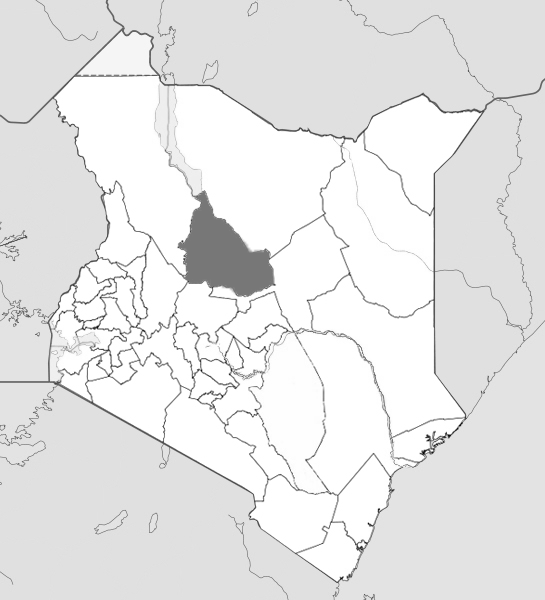
- Borders – Laikipia, Isiolo, Baringo, Turkana, Marsabit

Samburu County, in northern Kenya, offers stunning landscapes, rich cultural heritage, and unique wildlife. Known for its stunning mountains, hills, remote wilderness, traditional Samburu culture, and less-visited national reserves, the county provides an authentic experience away from the popular safari circuit.
You Are Here: Samburu County
Where to Next?
Explore Destinations in Samburu County
A Guide to Samburu County


A Summa Digest of Samburu

About Samburu Way Back When

50 Destinations in Samburu County, arranged as one would visit these - south, north, west then south - with aid of narratives, images, strip maps and distance chart:

Shaba National Reserve, Buffalo Springs National Reserve, Ashnil Samburu Camp, Archer's Post, Chanler’s Falls, Umoja Cultural Village, Nashipa Eco Camp, Lion's Cave Camp, Samburu National Reserve, Samburu Sopa Lodge, Samburu Intrepids Camp, Ewaso Lions, Kalama Conservancy, Saruni Samburu Lodge, Westgate Conservancy, Rhodia Mann Museum, Meibai Conservancy, Mount Ololokwe, Namunyak Community Conservancy, Sarara Camp, Singing Wells, Reteti Sanctuary, Mathews Range, Kitich Camp, Sera Conservancy, Saruni Rhino Camp, Ndoto Mountains, Mlima Tatu, Ngurunit, Ngurunit Rock Pools, Camp Ndotto, Mount Nyiru, Desert Rose, El Barta, Samburu Hills, Baragoi Deanery, Nachola Site, Napong Hills, Losiolo Escarpment, Emuruangogolak, Kirisia Forest, Ngari Hill Lodge, Maralal Safari Lodge, Yale Camp, Maralal Camel Derby, Kenyatta House Maralal, Loroghi Plateau, Engare Narok Sanctuary, Lake Mbaringon

Know More About Samburu County: Its Geography, Land-Use, Highlights, Population, Roads - including a distance chart, Airports, Climate & National Monuments

What’s The Air Like In Samburu?
Samburu is almost always hot! The driest months are January and February. The mean annual temperature is 29oC, with fast blowing winds especially on the lowlands. Rain is temporal and erratic.


What’s The Lay Of The Land In C.25?
Over 80% of Samburu lies within the fragile arid to semi-arid ecological vast block of Kenya. Altitude, excepting the ranges and mountains, varies from 2040 ms to 600 ms asl.
 Abiri Kenya