
Forest Reserves in Embu


Kiangombe Forest Reserve: A Mixed Forest
Kiang’ombe Hill Forest is the largest of Embu’s forest system and is easily accessible from the Ena-Siakago-Kiritiri Road or Embu-Kiritiri-Kitui Road. It occupies about 20 km2 of a predominantly indigenous forest, with less than 5% exotic plantations mainly found at the foot and top of the Kiang’ome Hill. Likewise, its wooded landscape is also one of the most over exploited hilltop forest which has gained enormous support for its sustainable conservation and rehabilitation.
The forest reserve is separated from Mumoni Hills, in Kitui County, by a broad valley through which River Tana flows, and in the east, where the Mumoni Hill sits, the landscape is typified by semi-humid to semi-arid open plains. To the south west sits Kianjiru Hill. North and northwest of Kiang’ombe the area contains a superb display of a verdant undulating landscape backdropped by Mount Kenya. It is the Kiang’ombe Hill, rising to 1804 ms, that draws walkers to the reserve. The block of resistant granitoid gneiss forming the main Kiang’ombe Hill is a focal-point for hiking parties. It is situated in Siakago about 11 km north of Kiritiri.

Kenya’s vast forest reserves are of immeasurable importance in biodiversity conservation, water regulation, and carbon storage. Collectively, these forests, natural and exotic, cover 2008 km2 or about 3.4% of Kenya’s land surface area, and 15% of the most fertile land. They also provide important recreational and ecotourism opportunities for visitors to enjoy Kenya’s natural beauty and wildlife.
Index of National Forests & Forests Reserves in Kenya


Baringo County - Tugen Hills Forest, Lembus Forest, Koibatek Forest, Bomet County - Chepalungu Forest, Trans Mara Forest, South Western Mau Forest Reserve, Bungoma County - Chepkitale Forest, Busia County - Budalang'i Forest, Elgeyo Marakwet County - Bugar Forest, Kessup Forest, Embobut Forest, Cherangani Hills Forest Reserve, Embu County - Njukiri Forest, Murinduko Hill Forest, Kirimiri Forest, Kiangombe Forest, Irangi Forest, Homa Bay County - Gwassi Hills Forest, The Kodera Forest, Kakamega County - Kakamega Forest Reserve, Kisere Forest, Malava Forest, Kericho County - Mau Forest Complex, Masaita Forest, Kiambu County - Kinale Forest, Kereita Forest, Kilifi County - Arabuko Sokoke Forest Reserve, Mwangea Hill Forest, Dakatcha Woodland, Kirinyaga County - Murinduko Forest, Njukiini Forest, Kisii County - The Nyangweta Forest, Kitui County - Mumoni Hill Forest Reserve, Muvaroa Hill Forest Reserve, Laikipia County - Marmanet Forest Reserve, Mukogodo Forest, Lamu County - Witu Forest, The Dodori Forest, Boni-Lungi Forest, Machakos County - Iveti Forest Reserve, Makueni County - Kibwezi Forest Station, Marsabit County - Marsabit National Reserve, The Turbi Forest, Meru County - Giitune Sacred Forest, Mucheene Forest, Mpogoro Forest, Ngaya Forest, Nyambane Hill Forest, Ngare Ndare Forest, Muranga County - Aberdare Forest Station, Nairobi County - Ngong Forest, The Karura Forest, Nandi County - South Nandi Forest, North Nandi Forest, North Tinderet Reserve, Nyandarua County - Nyandarua Forest, Dundori Forest, Samburu County - Kirisia Forest, Taita Taveta County - Ngangao Forest, Vuria Hill, Fururu Forest, Tharaka Nithi Forest - Chuka Forest Station, Vihiga County - Nganyi Forest, Kaimosi Forest, The Kibiri Forest, West Pokot County - Kamatira Forest

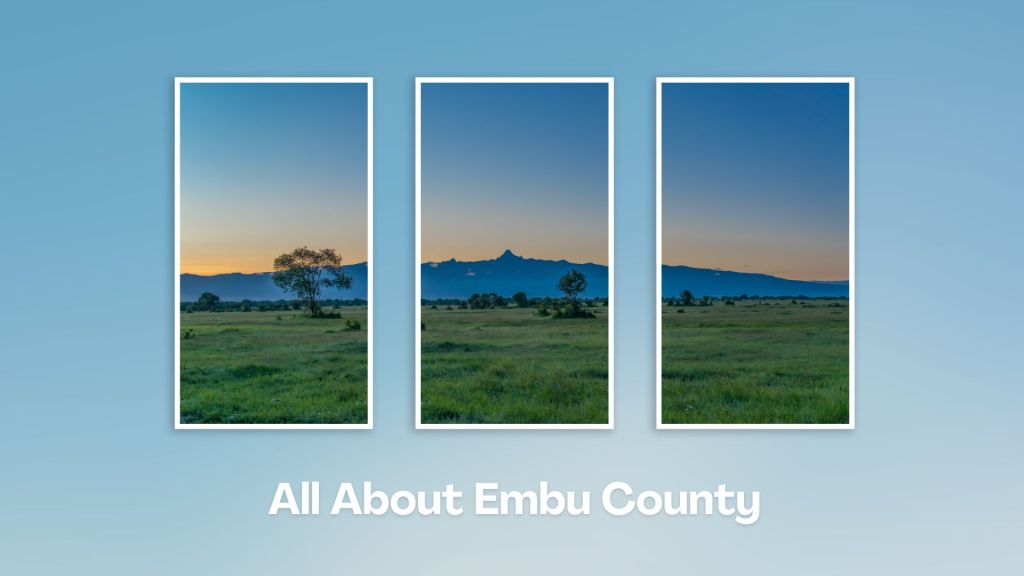
Situated at the base of Mount Kenya, Embu County offers a rich tapestry of cultural heritage, natural beauty, and adventure activities, making it a rewarding destination for travelers seeking an authentic experience in the central highland of Kenya. Engage with the Aembu and Mbeere people, who inhabit the region, and learn about their traditional way of life, like farming practices, music, and dance.
You Are Here: Kiangombe Forest
Where to Next?
Explore Destinations Near Kiagombe Forest
A Guide to Embu County


A Summa Digest of Embu

About Embu Way Back When

32 Destinations in Embu County, arranged as one would visit these - south, west, east then south - with the aid of narratives, images, strip maps and distance chart:

Mwea Rice Plains, Ndaraca ya Ngai, Embu Art Centre, Izaak Walton Inn, Iveche Falls, Karunina Falls, Njukiri Forest, Camp Ndunda Falls, Mount Kenya Riverside Retreat, Embu Golf Range, Murinduko Hill Forest, Karue Hill, Kirimiri Forest, Nthenge Njeru Falls, Nthungu Falls, Nthenge Njeru Hiking Trail, Irangi Forest Station, Mzima Fishing Camp, Kaagari-Gaturi Irrigation, Thuci River Lodge, Mbeere Terraces, Kiang’ombe Forest, Mumoni Hill, Kianjiru Hill, Mwea National Reserve, Kamburu Dam, Riakanau Beach, Masinga Dam, Masinga Dam Resort, Gitaru Dam, Kindaruma Dam, Kiambere Dam

Know More About Embu County: Its Geography, Land-Use, Highlights, Population, Roads - with aid of strip maps, Airports, Climate & National Monuments


What’s The Lay Of The Land In C.14?
Embu is exemplified by its sharply defined uplands, lowland and slopes from the north, northwest towards the east and southeast, with a few isolated hills such as Kiambere and Kiang’ombe.

What’s The Air Like In Embu?
Embu has a typical highland profile, on the windward side of Mount Kenya, with cold and wet upper zones to hot and dry lower zones in Tana River Basin. Temperatures range betwixt 20o and 30oC.

 Abiri Kenya