
Forest Reserves in Bomet


Trans Mara Forest: A Community Gem at Risk
Bomet County butts up against a long stretch of the great Mau Forest Complex. The Mau forms the largest continuous tract of indigenous forest in Kenya. It is home to a variegated array of flora and fauna including the rare Yellow Backed Duiker that is endemic to the 2,773 km2 Mau. The 344 km2 Trans Mara Forest is an outlying part of the Mau Complex which encompasses seven forest zones.
The seven forests – Mau Narok, Maasai Mau, Eastern and Western Mau, South and South West Mau and Bomet’s Trans Mara Forest – have a gazetted area of 244 000 ha, about 14.5 per cent of the total gazetted forest area in Kenya. Nyakweri Forest is the largest remaining forest section of Trans Mara Forest. This forms part of the dispersal area of the Maasai Mara National Reserve.
Trans Mara District had been originally hived-off Narok County in 1994, covering an area of 2,842 km2. Both the Mara Triangle and the Trans Mara Forest were part of the district which had its centre at Kilgoris. In 2010, under the new constitution, Trans Mara was restored back to Narok. Despite its faunal interest of bird species and wildlife, both Trans Mara and the Mau itself are underdeveloped for tourism.
Covering about 35 000 ha in the south-west of the Mau complex, Trans Mara Forest was gazetted in 1941 as a Forest Reserve. Still and all, most of its forest has been the subject of wanton defacing and sullying. Within the gazetted forest boundary part of the bamboo zone was cleared recently to give way to tea plantations, while the character of the forest at lower altitudes was substantially changed by extensive and destructive logging that took place from 1979 to 1986.
Unique to Trans Mara Forest, one of the spry closed-canopy forests in Kenya, is that its integrity is part thanks to the Maasai. In their simplistic and unsophisticated existence, they treat forests as a gem, just as they do their livestock that they regard as the source of life itself. Today, though not armed, the Saparingo rangers of Trans Mara Forest opt for participatory dialogue when engaging with the locals.

Kenya’s vast forest reserves are of immeasurable importance in biodiversity conservation, water regulation, and carbon storage. Collectively, these forests, natural and exotic, cover 2008 km2 or about 3.4% of Kenya’s land surface area, and 15% of the most fertile land. They also provide important recreational and ecotourism opportunities for visitors to enjoy Kenya’s natural beauty and wildlife.
Index of National Forests & Forests Reserves in Kenya


Baringo County - Tugen Hills Forest, Lembus Forest, Koibatek Forest, Bomet County - Chepalungu Forest, Trans Mara Forest, South Western Mau Forest Reserve, Bungoma County - Chepkitale Forest, Busia County - Budalang'i Forest, Elgeyo Marakwet County - Bugar Forest, Kessup Forest, Embobut Forest, Cherangani Hills Forest Reserve, Embu County - Njukiri Forest, Murinduko Hill Forest, Kirimiri Forest, Kiangombe Forest, Irangi Forest, Homa Bay County - Gwassi Hills Forest, The Kodera Forest, Kakamega County - Kakamega Forest Reserve, Kisere Forest, Malava Forest, Kericho County - Mau Forest Complex, Masaita Forest, Kiambu County - Kinale Forest, Kereita Forest, Kilifi County - Arabuko Sokoke Forest Reserve, Mwangea Hill Forest, Dakatcha Woodland, Kirinyaga County - Murinduko Forest, Njukiini Forest, Kisii County - The Nyangweta Forest, Kitui County - Mumoni Hill Forest Reserve, Muvaroa Hill Forest Reserve, Laikipia County - Marmanet Forest Reserve, Mukogodo Forest, Lamu County - Witu Forest, The Dodori Forest, Boni-Lungi Forest, Machakos County - Iveti Forest Reserve, Makueni County - Kibwezi Forest Station, Marsabit County - Marsabit National Reserve, The Turbi Forest, Meru County - Giitune Sacred Forest, Mucheene Forest, Mpogoro Forest, Ngaya Forest, Nyambane Hill Forest, Ngare Ndare Forest, Muranga County - Aberdare Forest Station, Nairobi County - Ngong Forest, The Karura Forest, Nandi County - South Nandi Forest, North Nandi Forest, North Tinderet Reserve, Nyandarua County - Nyandarua Forest, Dundori Forest, Samburu County - Kirisia Forest, Taita Taveta County - Ngangao Forest, Vuria Hill, Fururu Forest, Tharaka Nithi Forest - Chuka Forest Station, Vihiga County - Nganyi Forest, Kaimosi Forest, The Kibiri Forest, West Pokot County - Kamatira Forest

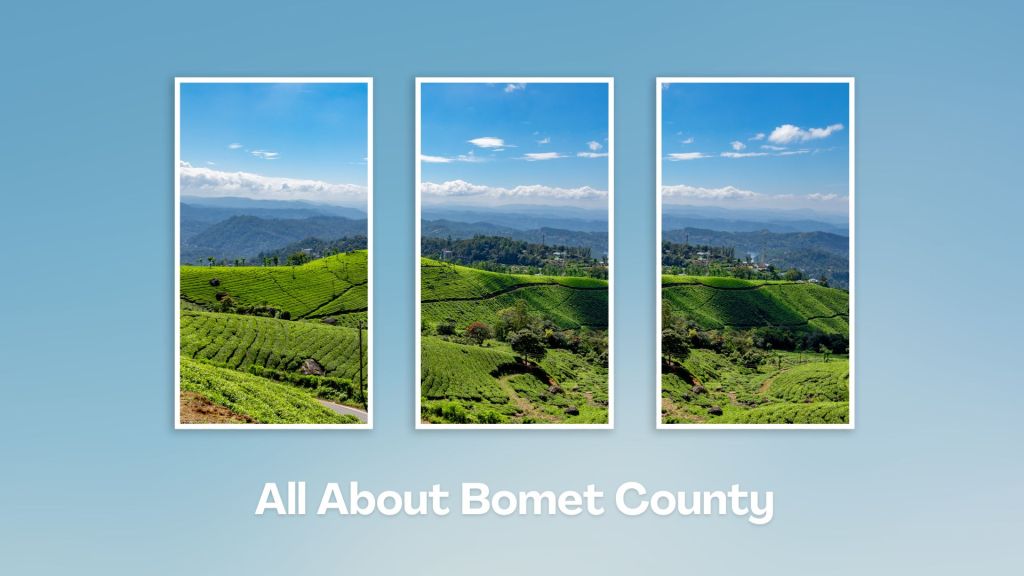
Touring Bomet County offers a chance to explore the lush landscapes, cultural heritage, and natural attractions of Kenya’s Rift Valley region. Whether you’re interested in nature, culture, or adventure, Bomet offers a diverse range of attractions and activities to explore. It is also a jumping-off place to Masai Mara.
You Are Here: Trans Mara Forest
Where to Next?
Explore Destinations Near Trans Mara Forest
A Guide to Bomet County


A Summa Digest of Bomet

About Bomet Way Back When

20 Destinations in Bomet County, arranged as one would visit these - east, north, south then west - with aid of narratives, images, strip maps and distance chart:

Kipsigis Oasis Sanctuary and Culture, Chepalungu Forest, Nogirwet Irrigation Scheme, Chebara Irrigation Scheme, Kaplelach Cultural Centre, Masese Nyangores Ecotourism, Nyangores River, Masai Mara National Reserve, Fair Hills Hotel, Sahara Gardens Hotel, The Willis Hotel, Tenwek Falls, Motigo Hill, Kipsegon Ecosystem, Tirgaga Tea Factory, Trans Mara Forest, South Western Mau Forest, Iria Maina Falls, Changoi Tea Factory

Know More About Bomet County: Its Geography, Land-Use, Highlights, Population, Roads - including a distance chart, Airports, Climate & National Monuments

What’s The Air Like In Bomet?
Rainfall is evenly distributed in Bomet, except for the short dryer season in January and February. Temperature levels range from 16oC to 24oC with the coldest months between February and April; and July.


What’s The Lay Of The Land In C.36?
Bomet has an undulating topography that gives way to a flatter terrain in the south. The overall slope is towards the south, except the north eastern region – which rises eastwards towards the 3,000 ms Mau Mountain Complex.
 Abiri Kenya